You've read the blogs. You've watched the videos. You've bought the silicone plates and the bamboo spoons. But when dinner rolls around and your baby is staring at a steamed carrot stick, panic sets in.
“Is this the right size?” “What if they choke?” “Should I have started with purees?” “Why won't they eat anything?”
Most parents abandon baby-led weaning not because it doesn't work — but because they don't have a plan.
This guide solves that. Below is a complete baby-led weaning meal plan designed specifically for 6-month-olds, with actual recipe cards you can screenshot and follow. Every meal includes:
- Prep time (most under 15 minutes)
- Exact ingredients (3–5 items you probably have)
- Step-by-step instructions (no guesswork)
- Safety notes (so you cook with confidence)
- Batch prep tips (cook once, feed all week)
Start with the free 7-day plan below. Each day has three complete meals — breakfast, lunch, and dinner — designed by pediatric nutrition principles and tested by real parents.
When you're ready for the complete 30-day system — including Weeks 2–4, grocery lists by week, 25 choking hazard foods to avoid, the 3-second gagging vs. choking guide, and printable fridge cards — grab The BLW Safety Blueprint. It's $27, it's instant, and it removes every “what do I cook?” decision for a full month.
Before You Start: The 3 Safety Rules That Matter
Baby-led weaning is safe when you follow three simple rules. These aren't suggestions — they're the foundation that makes every meal in this plan safe.
Rule 1: The Finger-Test Food Size
Food should be roughly the size and shape of an adult index finger — about the width of your pinky and long enough that some sticks out when your baby grips it.
Why this size? At 6 months, babies use a palmar grasp: their whole hand closes around the food, with the base tucked in their palm and the top sticking out to gnaw on. Small pieces are a choking risk because babies can't control them. Large sticks let them control the bite.
Wrong: Diced carrots, apple slices, whole grapes. Right: Carrot sticks the size of your finger, banana spears split lengthwise, broccoli florets with a long stem.
Rule 2: The Squish Test
Press the food between your thumb and forefinger. If it squishes easily, it's safe. If it holds firm, it's a choking hazard until cooked softer.
Safe after squishing: Ripe avocado, steamed sweet potato, well-cooked broccoli. Needs more cooking: Raw apple, raw carrot, undercooked meat. Always dangerous: Whole grapes, whole nuts, popcorn, hard candy, chunks of raw vegetables.
Rule 3: Sit, Secure, Supervise
- Sit: Baby in a proper high chair, upright at 90 degrees. Slumping changes the airway angle and increases choking risk.
- Secure: Strapped in, no slipping down. A footrest helps babies push against something, stabilizing their core for safer swallowing.
- Supervise: Eyes on baby, no phones, no multitasking. Choking is silent — you need to watch.
The Difference Between Gagging and Choking
This is the #1 fear that stops parents from doing BLW. Know the difference:
Gagging is normal. It's a learning reflex. Your baby's gag reflex is farther forward in the mouth than an adult's — this is protective, not dangerous.
- Signs: Loud sound (coughing, retching), baby turns red, eyes water, continues trying to eat after
- What to do: Stay calm. Don't panic. Don't stick your fingers in their mouth — this can push food further back. Let baby work it out.
Choking is an emergency.
- Signs: Silent (no air movement), baby turns blue around lips, wide panicked eyes, cannot cough or cry
- What to do: Call emergency services immediately and perform infant choking first aid. Learn the exact technique before starting BLW.
Foods to Avoid Completely
These are never safe for a 6-month-old, no matter how they're prepared:
- Whole grapes — slice lengthwise into quarters instead
- Raw apple — grate or steam until soft
- Whole nuts — ground into butter or powder only
- Popcorn — wait until age 4+
- Honey — wait until age 1 (botulism risk)
- Hard raw vegetables — always steam until squishable
Allergen Introduction Protocol
Current pediatric guidelines recommend introducing allergens early — between 4–6 months, once baby is developmentally ready. The key is systematic and safe:
- Introduce one allergen at a time — peanut, egg, dairy, wheat, soy, fish, sesame
- Do it in the morning — when your pediatrician's office is open
- Watch for 2 hours — most reactions occur within this window
- Start with a tiny amount — a smear of peanut butter thinned with breast milk, not a spoonful
- Keep a log — note what was introduced, how much, and any reaction
Get the complete allergen tracking sheet + emergency response cards in The BLW Safety Blueprint →
The 7-Day BLW Starter Plan — Free
Each day below includes three complete meals with recipe cards. Screenshot any card and follow it step by step.
Day 1 — First Foods
Theme: Gentle introduction. Single-ingredient foods, soft textures.

🥣 Breakfast: Iron-Fortified Oatmeal Fingers
- Prep time: 5 minutes (plus 10 min cook time)
- Ingredients: 3 tbsp iron-fortified baby oatmeal, 4 tbsp breast milk or formula, pinch of cinnamon
- Instructions:
- Cook oatmeal with milk/formula according to package directions
- Stir until thick (spoon stands up)
- Spread into a thin rectangle on a plate, let cool completely
- Cut into finger-sized strips (adult finger width)
- Safety: Must be thick enough to hold shape. Runny oatmeal is a choking risk.
- Batch prep: Make a double batch at breakfast. Store in fridge for tomorrow.

🍠 Lunch: Steamed Sweet Potato Wedges
- Prep time: 12 minutes
- Ingredients: 1 medium sweet potato
- Instructions:
- Peel and cut into wedges the size of adult fingers
- Steam for 10–12 minutes until very soft (fork slides through easily)
- Let cool to room temperature
- Serve 2–3 wedges
- Safety: Test with squish test before serving. Should mash between fingers.

🍌 Dinner: Banana Spear
- Prep time: 1 minute
- Ingredients: 1 ripe banana
- Instructions:
- Peel banana
- Cut in half crosswise
- Split each half lengthwise so it's flat (less likely to slip)
- Serve 1 spear
- Safety: Use a ripe banana (spots on peel). Unripe bananas are too firm.
Day 2 — Expanding Textures
Theme: Different textures. Eggs and broccoli introduce new mouth feels.

🍳 Breakfast: Scrambled Egg Yolk Clumps
- Prep time: 5 minutes
- Ingredients: 2 egg yolks, 1 tsp breast milk or formula, tiny pinch of unsalted butter
- Instructions:
- Whisk yolks with milk
- Melt butter in pan over low heat
- Pour in yolks, let set slightly, fold gently
- Cook until firm but not rubbery (2–3 minutes)
- Let cool, form into large clumps (adult-finger-sized)
- Safety: Cook thoroughly. No runny eggs. Large clumps only — no small bits.
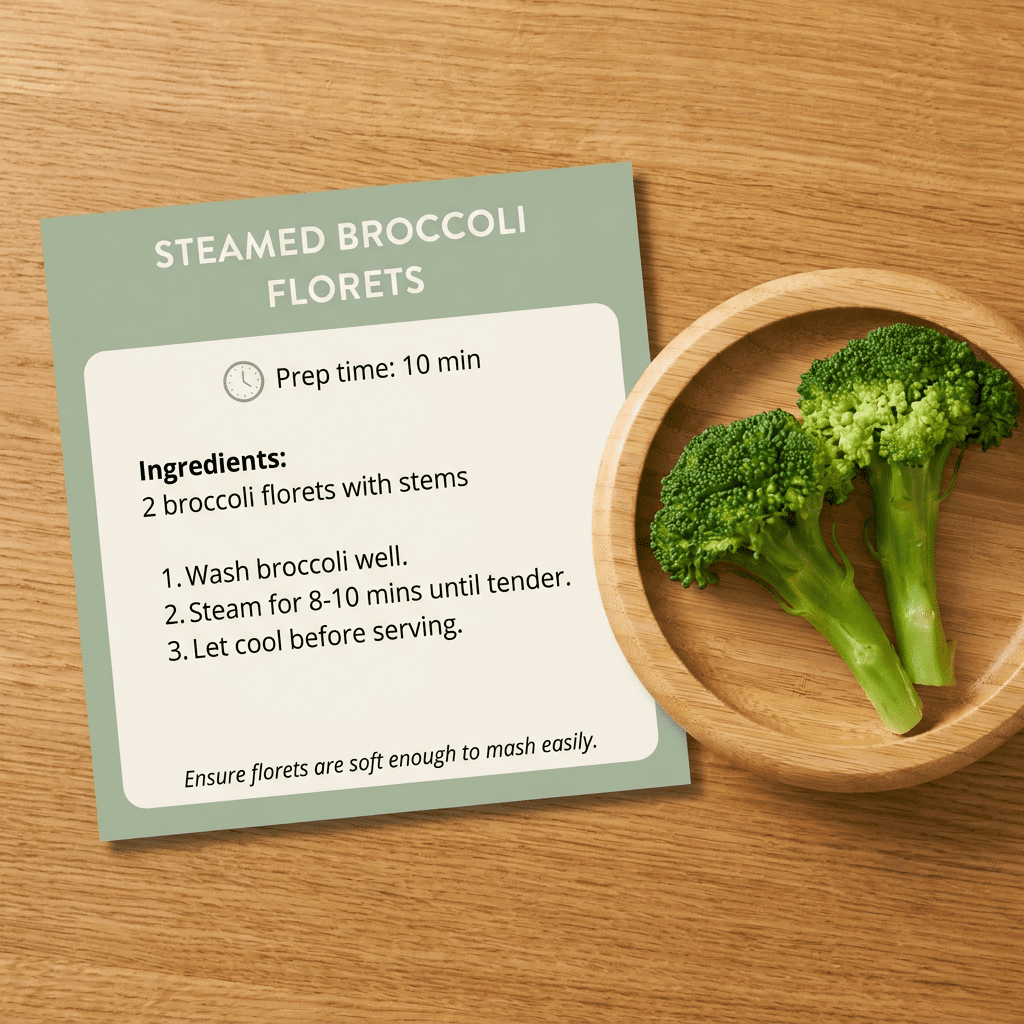
🥦 Lunch: Steamed Broccoli Florets with Stem
- Prep time: 10 minutes
- Ingredients: 2 broccoli florets with long stems
- Instructions:
- Cut florets with 2-inch stems attached
- Steam for 8–10 minutes until very soft
- Let cool
- Serve 1–2 florets
- Safety: The stem is the handle. Baby grasps stem, gnaws on soft floret top.

🥑 Dinner: Avocado Spear
- Prep time: 2 minutes
- Ingredients: 1/4 ripe avocado
- Instructions:
- Cut avocado in half, remove pit
- Peel skin off one quarter
- Slice into finger-sized spears
- Serve 1–2 spears
- Safety: Avocado is slippery. Roll in crushed baby cereal or ground flaxseed for grip if needed.
Day 3 — Adding Protein
Theme: Protein and iron. Essential for growth at 6 months.

🥣 Breakfast: Greek Yogurt with Mashed Berries
- Prep time: 3 minutes
- Ingredients: 3 tbsp full-fat Greek yogurt, 3 fresh blueberries or raspberries, mashed
- Instructions:
- Mash berries with fork until smooth
- Swirl into thick yogurt (yogurt should stick to a spoon)
- Offer on a pre-loaded spoon (you hold it, baby guides to mouth)
- Let baby self-feed
- Safety: Use full-fat yogurt. No added sugar. Thick yogurt only — runny is a choking risk.
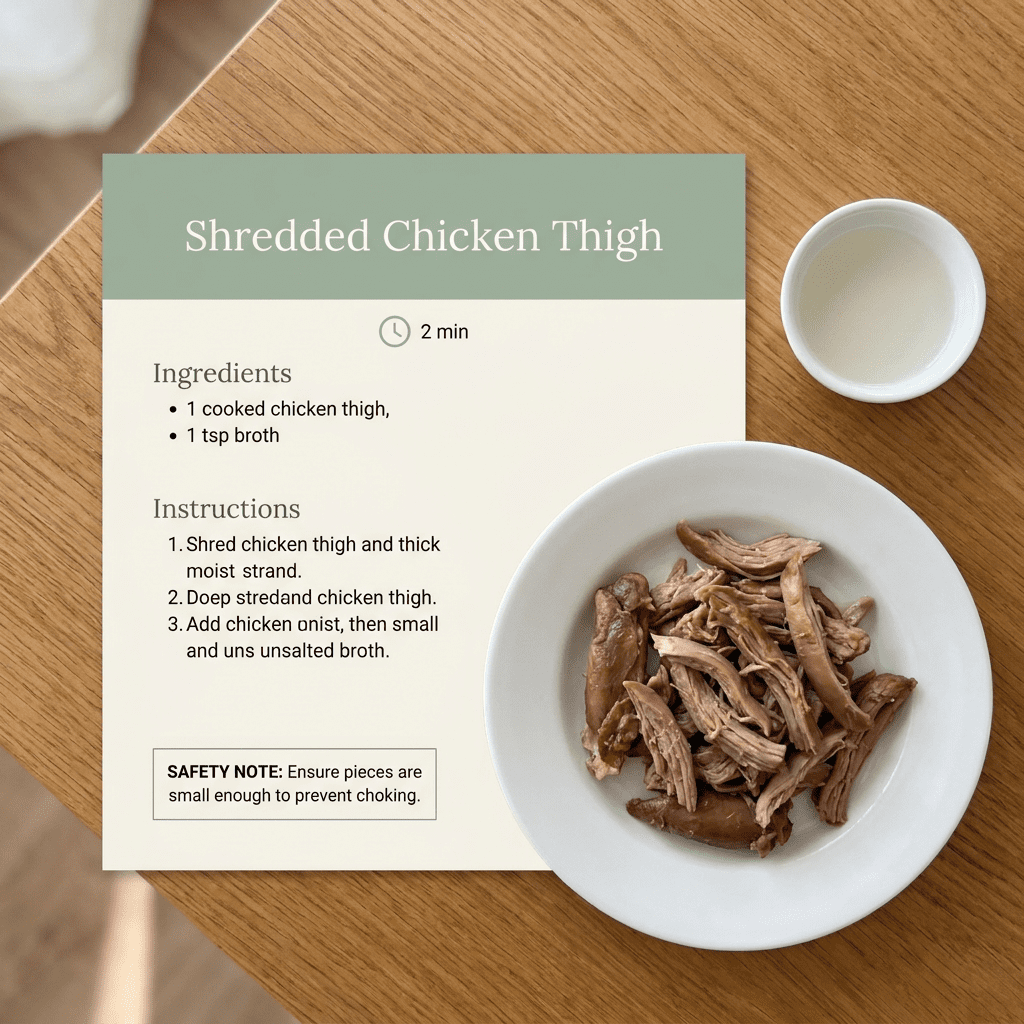
🍗 Lunch: Shredded Chicken Thigh
- Prep time: 2 minutes (if pre-cooked)
- Ingredients: 1 cooked chicken thigh (dark meat), 1 tsp unsalted broth
- Instructions:
- Shred cooked chicken into thick strands (not diced)
- Moisten with broth so it's not dry
- Serve a small palmful
- Safety: Dark meat is softer and moister than breast meat. Shred into long strands baby can gum.
- Batch prep: Cook 4 thighs in slow cooker on Sunday. Shred and refrigerate for the week.
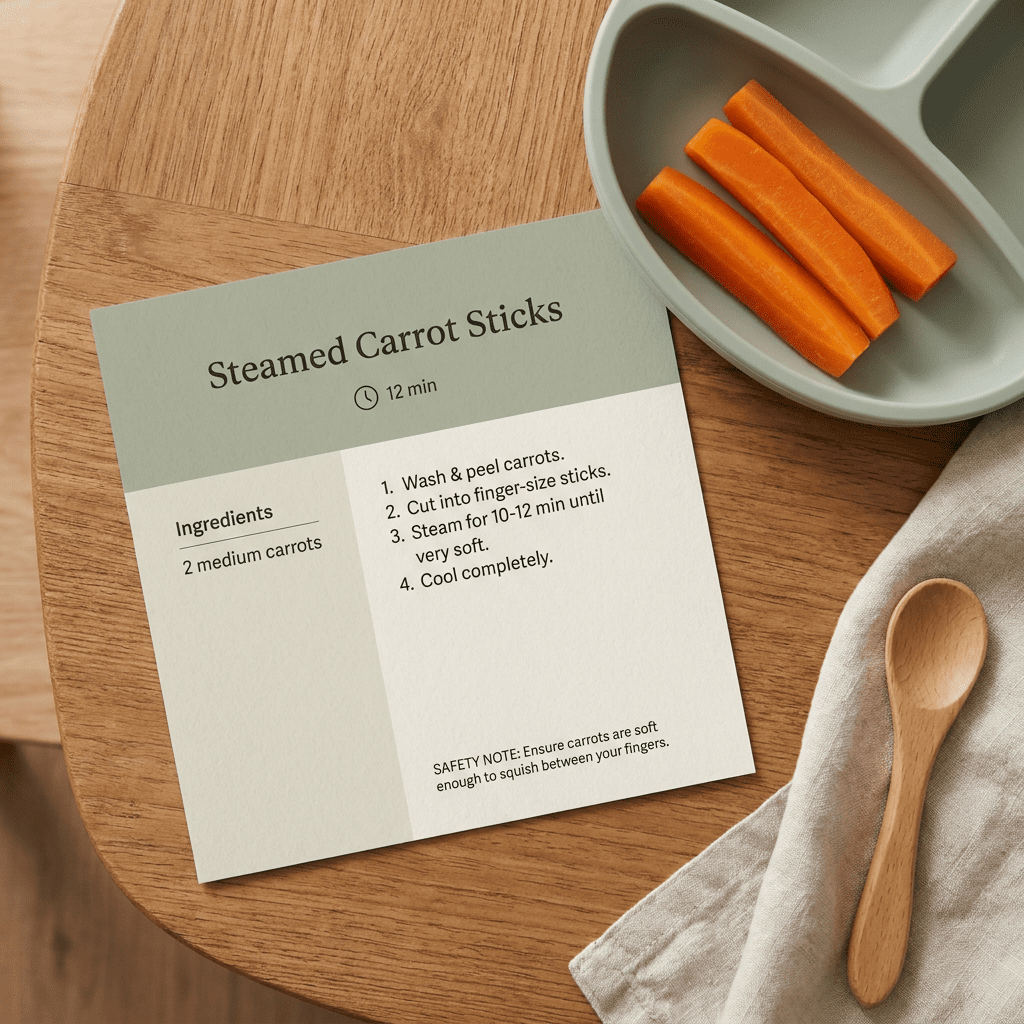
🥕 Dinner: Steamed Carrot Sticks
- Prep time: 12 minutes
- Ingredients: 2 medium carrots
- Instructions:
- Peel and cut into finger-sized sticks
- Steam for 10–12 minutes until very soft
- Let cool
- Serve 2–3 sticks
- Safety: Raw carrot is a choking hazard. Must be steamed until squishable.
Day 4 — Iron Focus
Theme: Iron is critical at 6 months. Baby's iron stores start depleting now.

🥣 Breakfast: Baby Cereal Strips
- Prep time: 5 minutes
- Ingredients: 3 tbsp iron-fortified baby cereal, 3 tbsp breast milk or formula
- Instructions:
- Mix cereal with liquid to form thick paste
- Spread into thin rectangle on plate
- Let cool and firm up (5 minutes)
- Cut into finger-sized strips
- Safety: Thick enough to hold shape when picked up.

🥩 Lunch: Soft Meatball Strips
- Prep time: 20 minutes (or use Sunday batch)
- Ingredients: 100g ground beef, 1 tbsp breadcrumbs, 1 egg yolk, 1 tbsp water
- Instructions:
- Mix ingredients gently (don't overwork)
- Form into small meatballs (golf ball size)
- Bake at 180°C/350°F for 15 minutes
- Cut into finger-sized strips when cool
- Safety: No salt added. Must be soft enough to squish. Check center is cooked through.
- Batch prep: Make 20 meatballs on Sunday. Freeze in portions. Reheat 2–3 at a time.
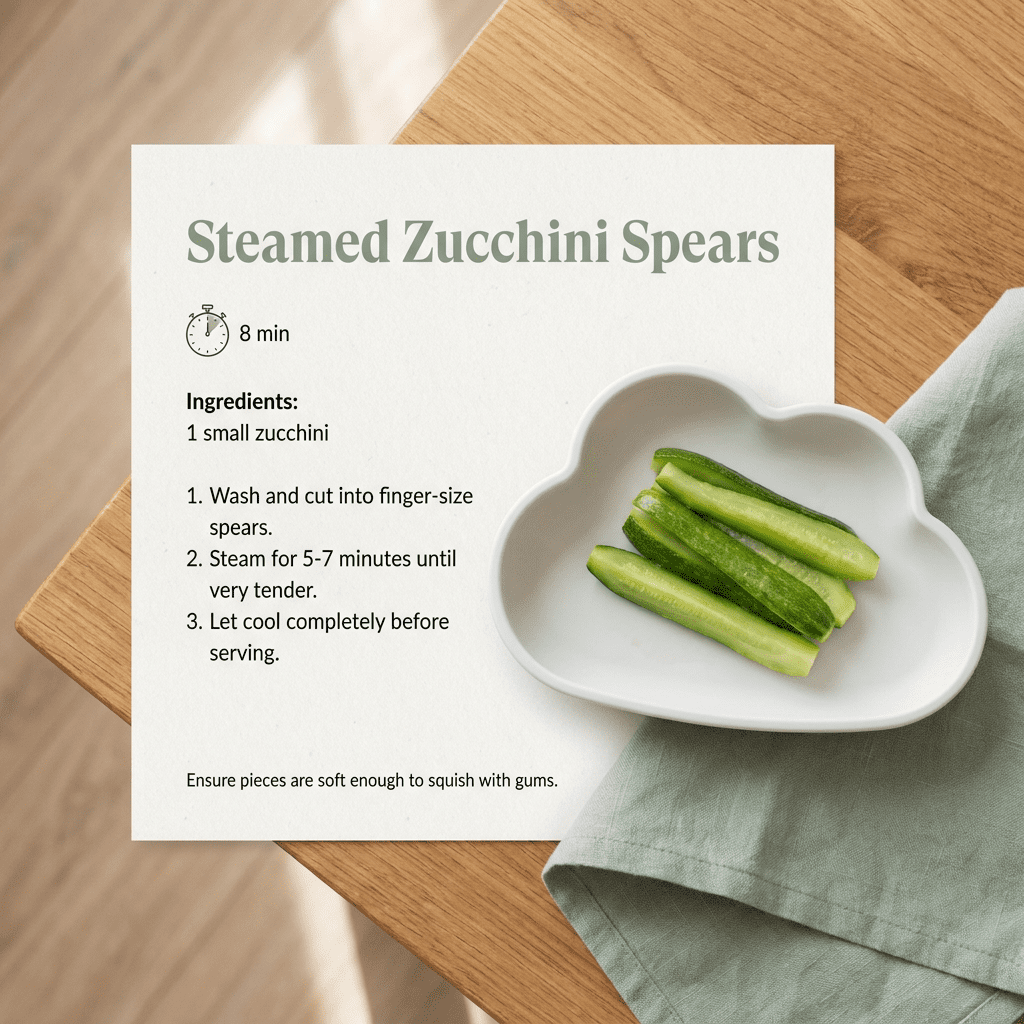
🥒 Dinner: Steamed Zucchini Spears
- Prep time: 8 minutes
- Ingredients: 1 small zucchini
- Instructions:
- Cut into finger-sized spears (leave skin on for grip)
- Steam for 6–8 minutes until soft
- Let cool
- Serve 2–3 spears
- Safety: Skin helps baby grip. Spear should mash easily.
Day 5 — Allergen Introduction
Theme: Safe introduction of common allergens. One at a time, morning, watch carefully.

🥜 Breakfast: Peanut Butter Toast Strip
- Prep time: 3 minutes
- Ingredients: 1 slice whole-grain bread, 1 tsp smooth peanut butter, 1 tsp breast milk or formula
- Instructions:
- Toast bread until firm but not hard
- Mix peanut butter with milk to thin it
- Spread thinly on toast
- Cut into finger-sized strips
- Serve 1 strip
- Safety: Introduce in the morning. Watch for 2 hours. Thin peanut butter reduces stickiness.

🥦 Lunch: Steamed Cauliflower Florets
- Prep time: 10 minutes
- Ingredients: 2 cauliflower florets with stems
- Instructions:
- Cut with 2-inch stems
- Steam for 8–10 minutes until very soft
- Let cool
- Serve 1–2 florets
- Safety: Test squish test. Should mash completely.
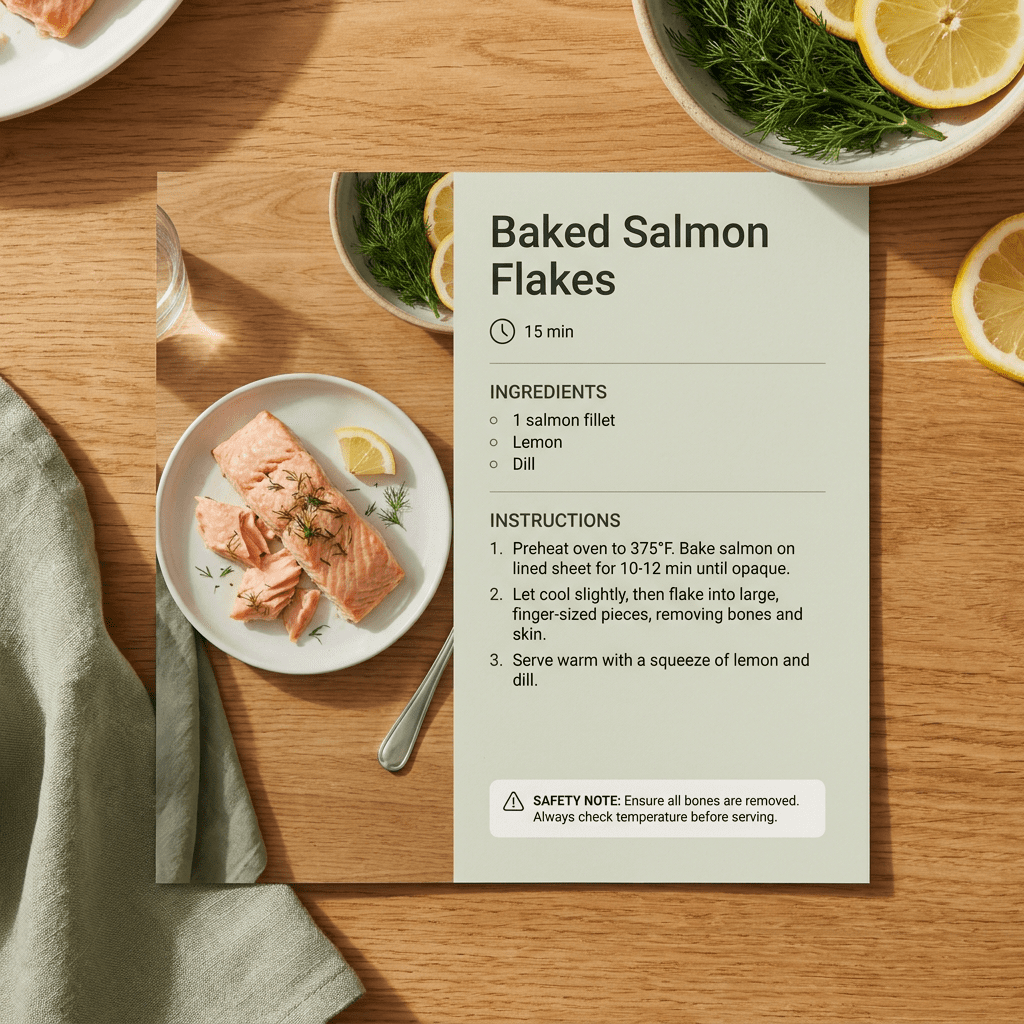
🐟 Dinner: Baked Salmon Flakes
- Prep time: 15 minutes
- Ingredients: 1 salmon fillet (100g), squeeze of lemon, pinch of dill
- Instructions:
- Place salmon on baking sheet
- Bake at 180°C/350°F for 12–15 minutes until flakes easily
- Check carefully for bones
- Flake into large pieces (adult-finger-sized flakes)
- Let cool completely
- Safety: Double-check for bones. Large flakes only. No small crumbly bits.
Day 6 — Finger Foods Practice
Theme: Foods that encourage independence. Baby practices self-feeding skills.

🥑 Breakfast: Toast with Avocado Spread
- Prep time: 3 minutes
- Ingredients: 1 slice whole-grain bread, 1/4 ripe avocado
- Instructions:
- Toast bread lightly
- Mash avocado and spread thickly
- Cut into finger-sized strips
- Serve 1–2 strips
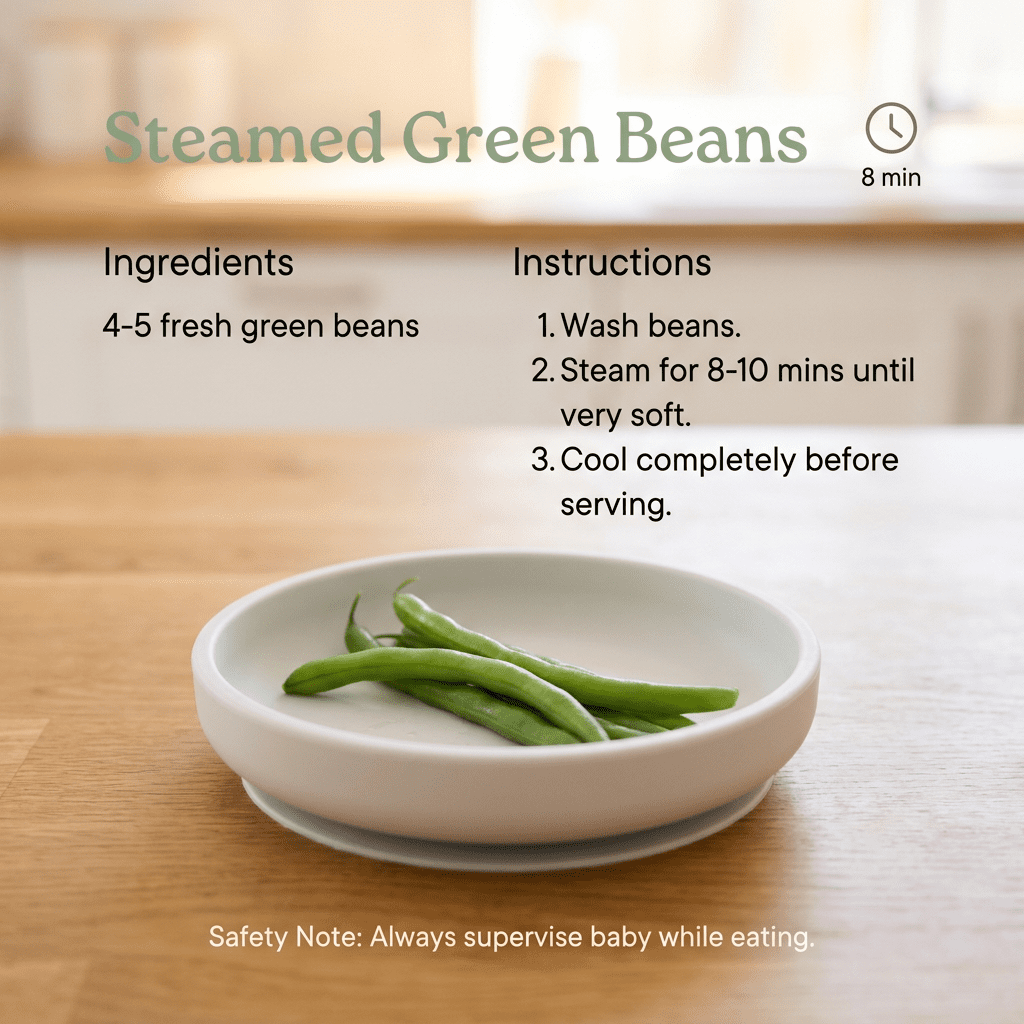
🫛 Lunch: Steamed Green Beans
- Prep time: 8 minutes
- Ingredients: 4–5 fresh green beans
- Instructions:
- Trim ends
- Steam for 6–8 minutes until very soft
- Let cool
- Serve whole (baby grasps one end, eats the other)
- Safety: Must be soft enough to gum. Stringy beans = choking risk. Cook until limp.
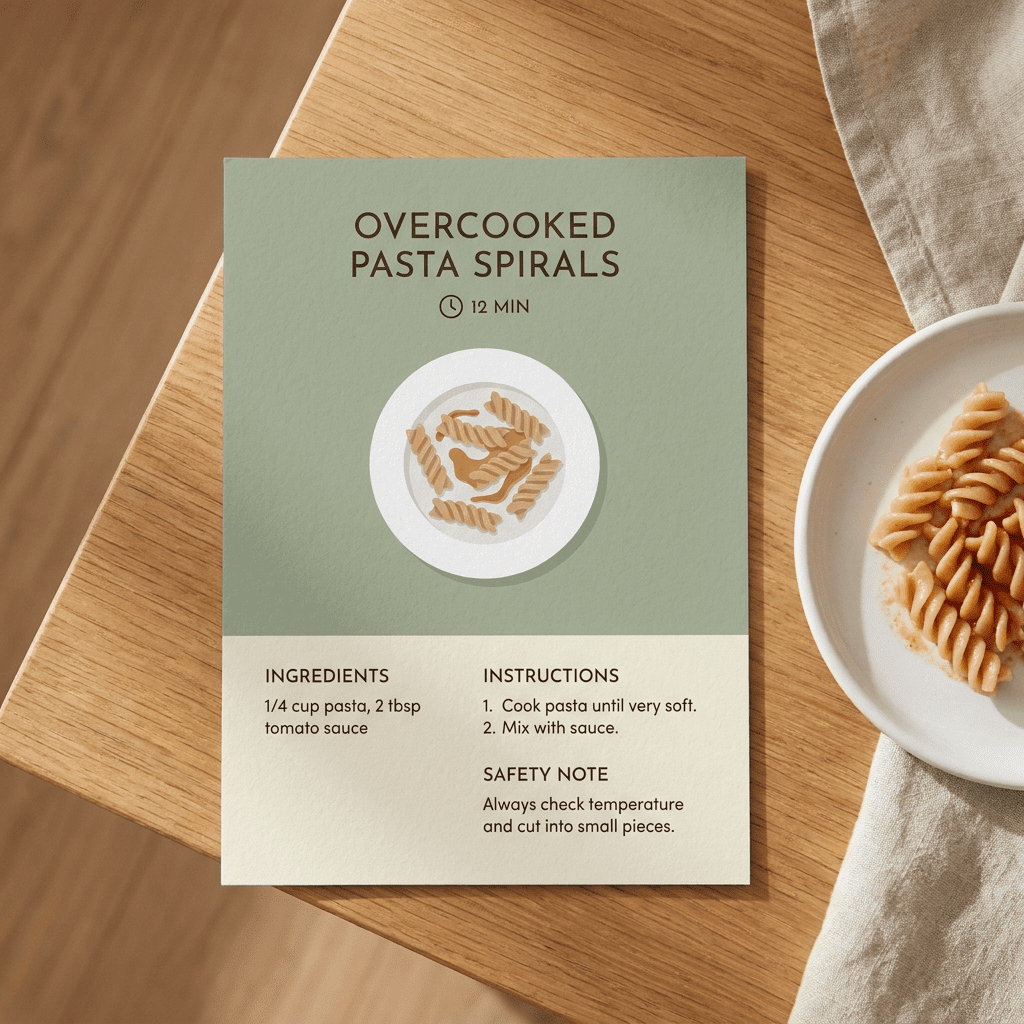
🍝 Dinner: Overcooked Pasta Spirals
- Prep time: 12 minutes
- Ingredients: 1/4 cup pasta spirals (whole grain), 2 tbsp tomato sauce (no salt added)
- Instructions:
- Cook pasta 2 minutes longer than package directions (very soft)
- Drain and rinse
- Toss with sauce
- Let cool
- Serve 4–5 spirals
- Safety: Overcook until very soft. Large shapes only (spirals, penne). No small shapes like orzo.
Day 7 — Mixed Textures
Theme: Combining flavors. Baby is ready for more complexity.

🥞 Breakfast: Baby Pancake Strips
- Prep time: 10 minutes
- Ingredients: 1/4 cup flour, 1 egg, 2 tbsp breast milk or formula, pinch of cinnamon
- Instructions:
- Mix ingredients into thin batter
- Pour small puddles (pancake size) into pan
- Cook 2 minutes per side until firm
- Let cool, cut into finger-sized strips
- Safety: No salt, no sugar. Must be firm enough to hold but soft enough to gum.
- Batch prep: Make a batch Sunday. Freeze between parchment paper. Reheat in toaster.
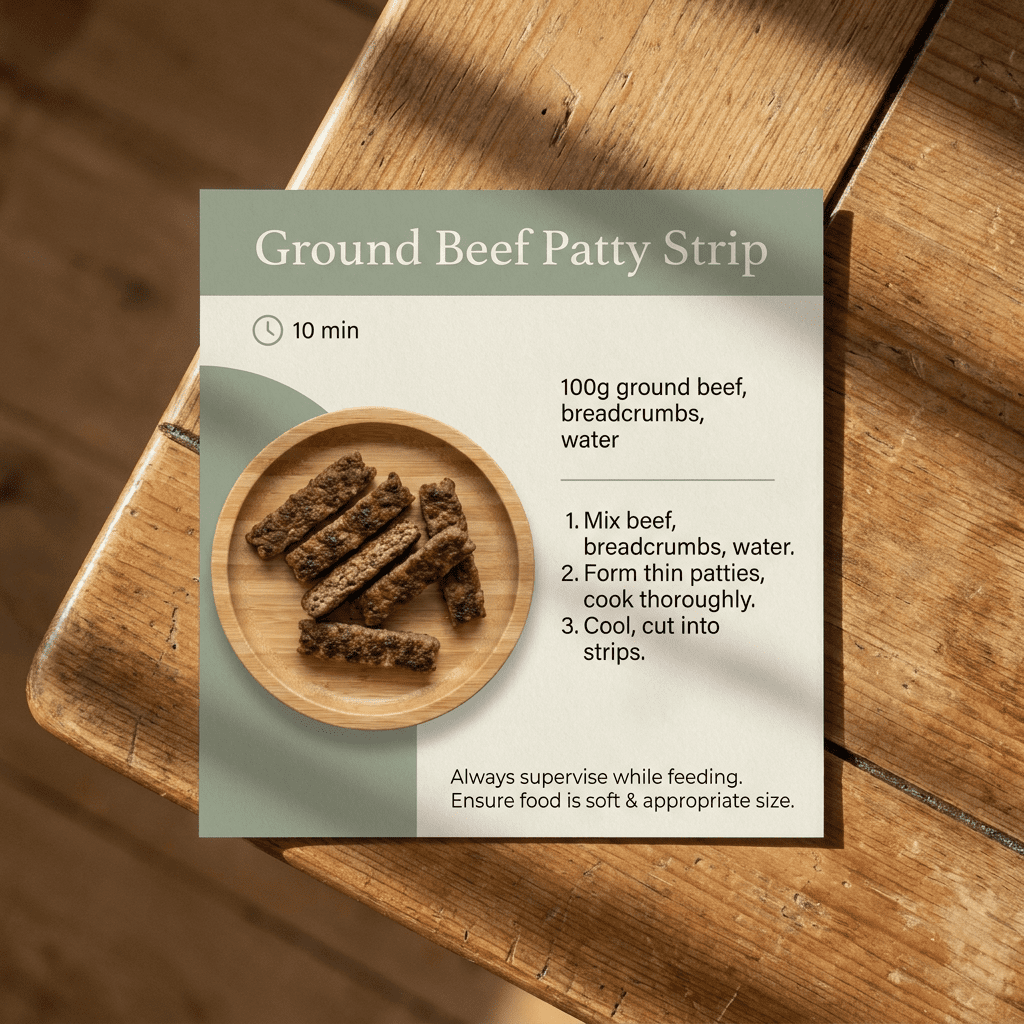
🍖 Lunch: Ground Beef Patty Strip
- Prep time: 10 minutes
- Ingredients: 100g ground beef, 1 tbsp breadcrumbs, 1 tbsp water
- Instructions:
- Mix gently, form into thin patty
- Pan-fry over medium heat for 4 minutes per side
- Let cool
- Cut into finger-sized strips
- Safety: No salt. Cook thoroughly. Cut against the grain for easier gumming.
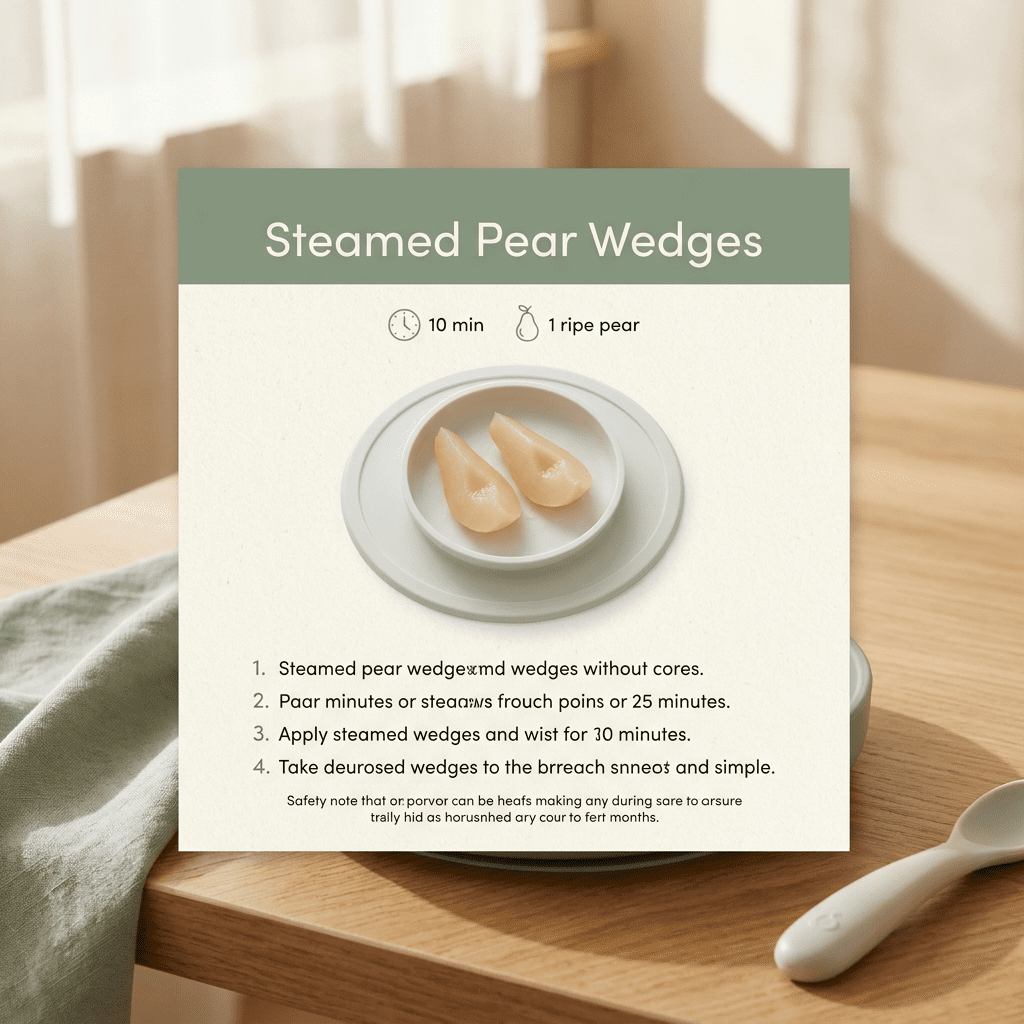
🍐 Dinner: Steamed Pear Wedges
- Prep time: 10 minutes
- Ingredients: 1 ripe pear
- Instructions:
- Peel, core, cut into wedges
- Steam for 6–8 minutes until soft
- Let cool
- Serve 2–3 wedges
- Safety: Remove core and seeds. Soft enough to mash with tongue.
You've now completed Week 1. Your baby has been introduced to grains, vegetables, fruits, proteins, and one common allergen. They're learning to grasp, gum, and explore textures.
Complete 30-Day BLW Meal Plan
The free 7-day plan above gets you started. Here's how Weeks 2–4 build on that foundation, with weekly themes that grow your baby's skills and palate.
Week 2 — Expanding Variety
Goal: Rotate proteins, grains, and vegetables so baby experiences new flavors and nutrients.
Breakfast Rotation:
- Iron-fortified oatmeal fingers
- Scrambled egg yolk clumps
- Greek yogurt with mashed berries
- Baby cereal strips
- Toast with nut butter (if no allergy)
Lunch Rotation:
- Shredded chicken thigh
- Turkey meatball strips
- Lentil stew (thick, cooled, in large clumps)
- Chickpea patty strips
- Ground lamb patty strips
Dinner Rotation:
- Steamed sweet potato wedges
- Steamed carrot sticks
- Steamed broccoli florets
- Steamed zucchini spears
- Steamed butternut squash wedges
New Foods Introduced: Butternut squash, pumpkin, mango, papaya, kiwi, plum
Sample Day 8:
- Breakfast: Oatmeal fingers with mashed blueberries
- Lunch: Turkey meatball strips with steamed carrot
- Dinner: Steamed butternut squash wedges
Sample Day 9:
- Breakfast: Scrambled egg with cheese (shredded, mixed in)
- Lunch: Steamed green beans with potato wedges
- Dinner: Baked cod flake with steamed zucchini
Sample Day 10:
- Breakfast: Toast with almond butter thinned (if no peanut allergy)
- Lunch: Lentil stew (thick, cooled, in large clumps)
- Dinner: Steamed asparagus tips (soft)
Week 3 — Self-Feeding Skills
Goal: Foods that require more coordination. Baby practices the pincer grasp precursor.
Breakfast: Pre-loaded spoons with thick textures (yogurt, mashed banana, thick cereal)
Lunch: Hand-held foods requiring more gnawing — meat on the bone (cleaned, large pieces), corn on the cob (baby gums the kernels off), large strips of bread
Dinner: Mixed textures — rice with soft vegetables, polenta with tomato sauce, soft bread with spreads
New Foods Introduced: Quinoa, rice, polenta, soft bread, cheese cubes (mild cheddar or mozzarella), tofu strips
Sample Day 11:
- Breakfast: Greek yogurt with mashed strawberries
- Lunch: Shredded pork (soft, moist, no sauce with sugar)
- Dinner: Steamed sweet potato with cinnamon
Sample Day 12:
- Breakfast: Baby cereal strips with banana
- Lunch: Chickpea patty (mashed, formed, pan-fried soft)
- Dinner: Steamed cauliflower with mild cheese
Sample Day 13:
- Breakfast: Pancake strip with mashed raspberries
- Lunch: Ground lamb patty strip with steamed carrot
- Dinner: Steamed pumpkin wedges with mild herbs
Week 4 — Combining Flavors
Goal: Baby eats what the family eats, modified for safety. No more separate cooking.
Breakfast: Multi-ingredient combinations — oatmeal with pear and cinnamon, egg and vegetable muffins, yogurt with multiple fruits
Lunch: Soft casseroles and stews — mild chili (no salt, beans soft), shepherd's pie (mashed topping), chicken and vegetable soup (large soft chunks)
Dinner: Family meals adapted for baby — pasta with mild sauce, roasted vegetables, slow-cooked meats
New Foods Introduced: Mild curry, herb-seasoned meats, tomato-based sauces, pasta with sauce, soft tacos (modified), risotto
Sample Day 14:
- Breakfast: Oatmeal with mashed pear and cinnamon
- Lunch: Tofu strips (firm, pressed, pan-fried soft)
- Dinner: Steamed broccoli with sweet potato
Recipe Card Format: How to Read Our Recipes
Every recipe in this guide follows the same format so you can screenshot, save, and cook without confusion.
Anatomy of a Recipe Card
Title: What the meal is called Prep Time: How long from start to plate (most under 15 minutes) Ingredients: 3–5 items you likely have. No exotic ingredients. Instructions: 3–4 numbered steps. No culinary jargon. Safety Note: The one thing that makes this safe for a 6-month-old Batch Prep Tip: How to make this ahead for the week
Visual Size Guide
“Finger-sized” means the size and shape of an adult index finger:
- Width: About the width of your pinky (1–1.5 cm)
- Length: 5–7 cm long, so some sticks out when baby grips it
- Shape: Long strips or wedges, not cubes or coins
Why this matters: At 6 months, babies use a palmar grasp — their whole hand closes around food. Long strips let them hold the base and gnaw on the top. Small pieces get pushed to the back of the mouth unpredictably.
Steaming Times Cheat Sheet
Most BLW vegetables are steamed. Here's how long each takes:
| Vegetable | Steam Time | Test |
|---|---|---|
| Broccoli | 8–10 min | Fork pierces stem easily |
| Sweet Potato | 10–12 min | Fork slides through |
| Carrot | 10–12 min | Fork slides through |
| Zucchini | 6–8 min | Very soft, limp |
| Cauliflower | 8–10 min | Fork pierces stem |
| Green Beans | 6–8 min | Limp, not crisp |
| Butternut Squash | 12–15 min | Fork slides through |
| Pumpkin | 10–12 min | Very soft |
| Pear | 6–8 min | Fork pierces easily |
| Apple (must cook) | 8–10 min | Very soft |
Texture Guide
Before serving any food to your baby, ask: Can I mash this with my tongue against the roof of my mouth?
- Yes: Safe to serve
- No: Cook longer or avoid
The squish test is faster: press between thumb and forefinger. If it squishes, it's ready.
Temperature Rule
All food must be cooled to room temperature before serving. Hot food can burn your baby's mouth and throat. If you steamed it, let it sit for 5–10 minutes. Test on your own lip before offering.
Sunday Batch Prep: 60 Minutes = Week of Meals
The #1 reason parents quit BLW? They try to cook fresh meals three times a day. Here's how to prep a full week in 60 minutes on Sunday.
The 60-Minute Sunday Prep Timeline
0–15 minutes: Start the long-cooking items
- Put 4 chicken thighs in slow cooker with a splash of unsalted broth (low, 6 hours)
- Peel and chop sweet potatoes, carrots, butternut squash
- Start steaming sweet potatoes (12 min)
15–30 minutes: Prep proteins and vegetables
- Mix meatball batch: 400g ground beef + 1 egg + 4 tbsp breadcrumbs + 4 tbsp water
- Form into 20 small meatballs, place on baking sheet
- Put in oven at 180°C/350°F (20 min total)
- Start steaming broccoli and carrots (10 min each)
30–45 minutes: Portion and store
- Remove steamed vegetables, let cool
- Portion into small airtight containers: 2–3 pieces per container
- Label: “Broccoli Tue,” “Carrots Wed,” etc.
- Check meatballs, remove when cooked through
- Portion meatballs into containers
45–60 minutes: Prep breakfast items
- Make a double batch of oatmeal, spread into rectangle, cool, cut into strips
- Mix pancake batter, cook 8 small pancakes, cool, cut into strips
- Prep any grain items (rice, quinoa) for the week
- Store everything in fridge (3 days) or freezer (1 month)
Storage Rules
Refrigerator (3 days maximum):
- Cooked vegetables: 3 days
- Cooked meats: 2 days
- Grains (oatmeal, rice): 3 days
- Label everything with the date cooked
Freezer (1 month maximum):
- Meatballs: Freeze on baking sheet first, then transfer to bag (prevents clumping)
- Pancake strips: Freeze between parchment paper layers
- Steamed vegetables: Freeze in single layers, then bag
- Bread slices: Freeze as-is
Reheating:
- Microwave: 20–30 seconds, stir, test temperature
- Oven: 5 minutes at 160°C/325°F
- Always test temperature on your lip before serving
Weekday Assembly: 5-Minute Plates
With Sunday prep done, weekday meals take 5 minutes:
- Open fridge
- Pick one item from each category:
- Grain/starch: oatmeal strip, toast, pancake, rice
- Protein: shredded chicken, meatball, egg, beans
- Vegetable: steamed broccoli, carrot, zucchini, sweet potato
- Fruit: banana, avocado, pear (fresh or pre-steamed)
- Arrange on plate
- Let sit 2 minutes to reach room temp
- Serve
Family Meal Adaptation: Cook Once, Feed Everyone
You don't need to cook separate baby food. Adapt what you're already making:
Remove baby's portion before adding salt, sugar, or strong spices. Cook the family meal, plate baby's portion, then season the rest for adults.
Examples:
- Pasta night: Cook pasta extra soft. Remove baby's plain pasta before adding sauce to the rest. Thin sauce with water for baby.
- Stir-fry: Steam baby's vegetables separately. Use plain chicken for baby, sauced chicken for adults.
- Roast dinner: Baby gets plain roasted vegetables and meat. Adults get the seasoned version.
- Soup: Remove large soft chunks for baby before blending the rest.
The rule: Baby eats what you eat, modified for texture and salt content.
What If My Baby Doesn't Eat Anything?
Normal. At 6 months, “eating” means:
- Touching food
- Squishing food
- Putting food in mouth
- Spitting it out
- Maybe swallowing a tiny bit
Most parents panic because they expect a 6-month-old to eat like a toddler. They won't. Here's what's actually happening — and what to do about it.
Normal Eating Behaviors at 6 Months
Your baby is learning three things at every meal:
- Oral motor development — How to move food around their mouth, gum it, and eventually chew
- Sensory exploration — What different textures feel like, taste like, smell like
- Allergy introduction — Early exposure to common allergens in a controlled way
Nutrition still comes from breast milk or formula. Solid foods at 6 months are for practice, not primary calories. The milk feeds — 4–6 per day — provide 90%+ of their nutrition until around 10–12 months.
Reframe “success”:
- One bite swallowed = win
- Ten bites = amazing
- Zero bites but baby touched the food = learning
- Baby threw the plate = also learning (gravity is fascinating)
Milk + Solids Schedule
At 6 months, milk is still the main event. Solids are the sideshow.
Typical 6-month-old schedule:
- 6:00 AM: Milk feed
- 7:30 AM: Breakfast (solids) — 1–2 tablespoons of food
- 9:30 AM: Milk feed
- 12:00 PM: Lunch (solids) — 1–2 tablespoons of food
- 2:30 PM: Milk feed
- 5:00 PM: Dinner (solids) — 1–2 tablespoons of food
- 7:00 PM: Milk feed (bedtime)
At this stage, “meals” are 10–15 minute practice sessions. If baby shows no interest after 10 minutes, end the meal. No pressure.
When to Worry
Most eating “problems” at 6 months are normal. But contact your pediatrician if:
- Baby is losing weight or not gaining
- Baby refuses milk feeds (not just solids)
- Baby has fewer wet diapers than usual
- Baby shows signs of dehydration
- Baby has persistent vomiting or diarrhea
- Baby has a rash, swelling, or breathing difficulty after eating (possible allergic reaction)
Red flag: If your baby is not wetting at least 6 diapers per day, call your pediatrician. This is a milk intake issue, not a solid food issue.
When to Move to Week 2
Don't wait for “mastery” to move forward. Progress when:
- Baby has tried all Week 1 foods at least once
- You're comfortable with the safety rules
- Baby is showing interest (reaching, watching, opening mouth)
Some babies take 2 weeks to get through Week 1. Others blast through in 3 days. Both are fine.
The goal isn't quantity. The goal is exposure, safety, and building positive associations with food.
Frequently Asked Questions
How much should my 6-month-old eat?
At 6 months, “meals” are practice. Most babies eat 1–2 tablespoons of food per meal. Breast milk or formula remains the primary nutrition source until 12 months. Think exposure, not calories.
What if my baby gags a lot?
Gagging is protective and normal. It means the gag reflex is working. Stay calm, don't panic, and let baby work it out. Never stick your fingers in their mouth — this can push food further back. Gagging is loud; choking is silent.
Can I do BLW and purees together?
Yes. This is called “combination feeding.” Many parents do purees at daycare and BLW at home. Do what works for your family. The goal is positive food exposure, not purity of method.
When should I introduce allergens?
Current pediatric guidelines recommend introducing allergens early — between 4–6 months, once baby is developmentally ready. Introduce one at a time, in the morning, and watch for 2 hours. Common allergens: peanut, egg, dairy, wheat, soy, fish, sesame.
What if my baby refuses food?
Refusal is normal. Keep offering without pressure. Babies may need 8–15 exposures before accepting a new food. Never force, never bribe, never trick. Stay neutral — your anxiety transmits to baby.
Do I need to cut food into special shapes?
Yes — but it's simple. Finger-sized strips for palmar grasp (6–8 months). Once baby develops pincer grasp (9+ months), you can offer smaller pieces. The rule: large enough to hold, soft enough to squish.
Can I use frozen vegetables?
Absolutely. Frozen vegetables are often more nutritious than “fresh” vegetables that have been trucked across continents. Steam from frozen — no need to thaw first. Add 2–3 minutes to steaming time.
What if I'm vegetarian or vegan?
BLW works perfectly with plant-based diets. Focus on iron-rich foods: lentils, beans, tofu, fortified cereals, nut butters. Pair iron sources with vitamin C (berries, citrus, tomatoes) to boost absorption. Consult a pediatric dietitian for B12 and vitamin D guidance.
How do I handle eating out?
Bring a few safe foods in a small container (steamed carrot sticks, banana, avocado). Order something baby-safe from the menu: plain rice, steamed vegetables, soft bread. Ask for no salt. Use a travel placemat or silicone mat. High chair safety rules apply everywhere.
When can baby have water?
Small sips of water can be offered with meals starting at 6 months. Use an open cup or straw cup (no sippy cups — they delay oral development). 1–2 ounces per meal is plenty. Milk remains the primary drink until 12 months.
Conclusion: You've Got This
Baby-led weaning feels overwhelming because every blog, every Instagram account, and every well-meaning relative tells you something different. But the truth is simple:
Safe food + hungry baby + calm parent = successful BLW.
The 7-day plan above gives you exactly that. Each meal is safe (finger-sized, squishable, supervised). Each meal is simple (under 15 minutes, ingredients you have). And each meal builds on the last so your baby grows from first touches to confident self-feeding.
Your next steps:
- Pick one meal from Day 1 and try it at your baby's next mealtime. You don't need to do all three meals on Day 1. Start with breakfast.
- Screenshot the recipe cards you want to try. Save them to a folder on your phone. Build your own quick-reference library.
- When you're ready for more — Weeks 2–4, complete grocery lists, the 60-minute Sunday prep system, 25 choking hazard foods to avoid, the 3-second gagging vs. choking visual guide, and printable fridge cards for grandparents and caregivers — grab The BLW Safety Blueprint. It's $27, it's instant, and it removes every “what do I cook?” decision for a full month.
Remember: Your baby is learning. You're learning. Some days will be messy. Some days baby will eat nothing. Both are normal. The goal isn't a clean plate — it's a confident, curious eater who trusts food.
You've got this.
Related Articles from KidsBaron
- Gagging vs. Choking in Baby-Led Weaning: The Visual Guide
- BLW Safety Checklist: The Complete Guide
- 5 Signs Your Baby Is Ready for BLW (Not Just Age)
- BLW Safety: A Parent's Complete Guide
This article was reviewed for safety accuracy by pediatric feeding specialists. Always consult your pediatrician before starting solids. The BLW Safety Blueprint is a reference guide and does not replace professional medical advice.