The future doesn't begin when children enter school. It doesn't start when they learn to read, or when they first sit at a desk with a pencil in hand. The future—your child's capacity for logical thought, spatial reasoning, problem-solving, and innovative thinking—begins in the earliest years, during moments that look deceptively simple.
A toddler stacking blocks isn't just playing. They're building neural pathways. They're testing hypotheses. They're learning that actions have consequences, that problems have solutions, and that persistence pays off. They are, in the most fundamental sense, becoming scientists.
This is why STEM learning in toddlerhood matters—not because we need more engineers (though we do), but because early hands-on exploration builds the cognitive architecture for how children will think, learn, and solve problems for the rest of their lives.
The Future Starts Earlier Than We Think
When Brain Plasticity Is at Its Peak
During the first three years of life, a child's brain forms more than one million neural connections every second. This isn't metaphor—it's measurable neuroscience. Research from Harvard's Center on the Developing Child confirms that the brain is more influenced by experience during early childhood than at any other time in life. In fact, toddlers have approximately 50 percent more connections between neurons than adults do.
This extraordinary neuroplasticity represents a window of opportunity. The experiences children have during these years don't just teach them facts—they fundamentally shape how their brains are wired. When a toddler experiments with cause and effect, sorts objects by color, or figures out how to make a tower balance, they're not simply learning concepts. They're creating the neural infrastructure that will support abstract thinking, mathematical reasoning, and scientific inquiry later in life.
Toddlers Are Natural Scientists
Watch a two-year-old at play, and you'll witness the scientific method in action. They observe: What happens when I drop this? They hypothesize: Maybe it will bounce. They experiment: Let me try it again.They analyze: It didn't bounce that time—why? And they iterate: What if I drop it from higher up?
This isn't accidental. Toddlers are hardwired for exploration. Their brains are designed to seek patterns, test boundaries, and make sense of the physical world through direct interaction. Studies published in Early Childhood Research Quarterly demonstrate that even very young children engage in systematic problem-solving when given the opportunity to manipulate objects and observe outcomes.
The question isn't whether toddlers are ready for STEM learning. The question is whether we're ready to recognize that what looks like play is actually the foundation of all future learning.
Curiosity as the Root of STEM
Before a child can master algebra, they must first be curious about why things work the way they do. Before they can understand physics, they need to have spent hundreds of hours experimenting with gravity, momentum, and balance through play. Research indicates that children as young as three who engage with spatial toys like blocks and puzzles develop significantly stronger mathematical reasoning skills in elementary school and beyond.
Curiosity is the engine of STEM learning, and toddlerhood is when that engine is built. When we provide young children with materials that invite exploration, we're not accelerating their education—we're honoring their natural developmental timeline.
What STEM Actually Means for Toddlers
It's Not Coding. It's Not Worksheets.
Let's be clear: STEM for toddlers has nothing to do with flashcards, apps, or formal lessons. It's not about teaching a two-year-old to count to 100 or recognize geometric shapes on command. That's not STEM—that's rote memorization, and it misses the point entirely.
Real STEM learning in early childhood is experiential, physical, and deeply playful. It happens in moments that look ordinary but are cognitively profound.
STEM for Toddlers Is:
Sorting. When a child separates toys by color or size, they're engaging in classification—a fundamental skill for data analysis, categorization, and scientific observation.
Stacking. Building a tower that doesn't fall requires spatial reasoning, balance, and trial-and-error problem-solving. Johns Hopkins research shows that children approach block-building with remarkable sophistication, making selective and systematic decisions about structure and stability.
Building. Whether with blocks, magnetic tiles, or cardboard boxes, construction play strengthens three-dimensional thinking, planning skills, and an understanding of how parts relate to wholes.
Testing. Pouring water between containers, rolling balls down ramps, or pushing objects to see what happens—these are experiments. They teach toddlers about volume, velocity, and cause-and-effect relationships.
Pouring. Transferring liquids or sand develops fine motor skills while also introducing concepts of measurement, volume, and containment.
Observing. Watching ants carry food, noticing how shadows change, or tracking where water goes—observation is the first step of scientific inquiry.
Comparing. Figuring out which container holds more, which block is heavier, or which path is shorter lays the groundwork for quantitative thinking and measurement.
These activities don't require expensive materials or special training. They require time, space, and the freedom to explore without constant correction or instruction.
The Science Behind Hands-On Learning
Why Physical Interaction Strengthens Neural Pathways
There's a reason screen-based learning doesn't have the same impact as hands-on play for toddlers: physical manipulation creates multi-sensory experiences that encode learning far more deeply in the brain. When a child picks up a block, their brain receives tactile feedback (how it feels), visual feedback (how it looks), proprioceptive feedback (how much it weighs and how their arm moves), and eventually auditory feedback (the sound it makes when it falls).
Research on neuroplasticity shows that these multi-sensory experiences send signals to the brain that strengthen neural connections. The more senses involved, the more robust the learning. This is why children who physically manipulate objects—rather than simply seeing them on a screen—develop stronger spatial skills and deeper conceptual understanding.
How Experimentation Builds Executive Function
Executive function refers to the set of mental skills that help us plan, focus attention, remember instructions, and manage multiple tasks. These skills are critical for academic success and life success—and they're built through play.
When a toddler works on a puzzle, they practice:
- Working memory (remembering what pieces they've tried)
- Cognitive flexibility (trying a different approach when one doesn't work)
- Inhibitory control (resisting the urge to force a piece that doesn't fit)
Studies published in Early Childhood Education Journal confirm that play-based learning—particularly open-ended, exploratory play—significantly enhances executive function development in preschool-aged children. Games and construction activities require children to hold goals in mind, adjust their strategies, and regulate their emotions when things don't go as planned.
Why Trial-and-Error Builds Resilience
Perhaps most importantly, hands-on STEM play teaches toddlers that failure is information, not defeat. When a tower collapses, it's not a mistake—it's data. The child learns: That base wasn't wide enough. Next time I'll try something different.
This iterative process—trying, failing, adjusting, and trying again—is the essence of both scientific thinking and emotional resilience. Research on mastery motivation shows that children who are allowed to persist through challenges develop greater confidence, frustration tolerance, and problem-solving skills than children who are either rescued from difficulty or given tasks that are too easy.
The Power of Cause-and-Effect Loops
One of the most foundational STEM concepts toddlers learn through play is cause and effect: When I do X, Y happens. This seems simple, but it's the basis of all scientific and logical reasoning.
Every time a toddler presses a button and something lights up, drops an object and watches it fall, or turns a crank and sees gears move, they're reinforcing their understanding that the world is predictable and that their actions have power. Developmental research from the University of Washington emphasizes that understanding cause-and-effect enables children to take control of their environment and builds the confidence to explore independently.
Pattern Recognition and Early Logic
Patterns are everywhere—in music, language, mathematics, and nature. When toddlers begin to recognize patterns (red block, blue block, red block, blue block), they're developing the cognitive foundation for algebraic thinking, prediction, and sequencing.
Research from Michigan State University Extension confirms that pattern recognition helps children learn how to make logical connections and predictions. Before a child can understand complex equations, they need to grasp that elements can repeat in predictable ways. Before they can understand algorithms, they need to have spent time observing and creating sequences.
Types of STEM Toys for Toddlers (And Why They Work)
The best STEM toys for toddlers aren't flashy or battery-powered. They're open-ended, durable, and inviting—materials that do less so that children can do more.
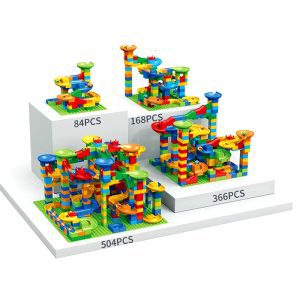
Building Blocks
What They Teach: Spatial reasoning, geometry, balance, planning, and problem-solving.
Why They Matter: Blocks are arguably the single most valuable STEM toy for early childhood. Longitudinal research shows that children's block-building complexity at age three predicts their spatial skills and mathematical abilities years later. When a child builds with blocks, they're learning about symmetry, proportion, stability, and three-dimensional relationships—concepts that underpin architecture, engineering, and advanced mathematics.
Long-Term Impact: Children who engage in regular block play demonstrate stronger spatial visualization skills, which are directly linked to success in STEM careers. But beyond career outcomes, block play teaches children that complex structures are built one piece at a time—a metaphor for all learning.
Magnetic Tiles
What They Teach: Magnetism, geometry, spatial transformation, and creative problem-solving.
Why They Matter: Magnetic tiles add an element of sensory feedback (the satisfying click when pieces connect) and introduce basic physics concepts (attraction and repulsion). They allow children to build in three dimensions while also experimenting with transparency, light, and color.
Long-Term Impact: The flexibility of magnetic tiles encourages children to take creative risks. Because structures can be easily modified, children learn to iterate—to improve designs rather than start over. This kind of flexible thinking is essential for innovation.
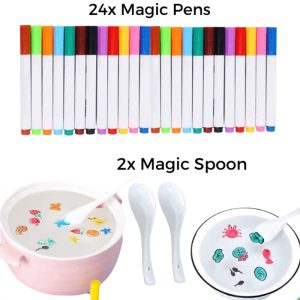
Water Tables and Pouring Materials
What They Teach: Volume, measurement, fluid dynamics, and prediction.
Why They Matter: Water play is profoundly sensory and endlessly variable. Toddlers can pour, measure, transfer, and observe how water behaves in different containers. Sensory play research demonstrates that children develop early scientific reasoning through hands-on exploration of materials like water, sand, and other substances with different properties.
Long-Term Impact: Through repeated experimentation with volume and flow, children build intuitive mathematical understanding that will later support formal lessons in measurement and fractions.
Shape Sorters
What They Teach: Geometry, spatial reasoning, problem-solving, and persistence.
Why They Matter: Shape sorters require children to mentally rotate objects, compare dimensions, and test hypotheses (Will the circle fit in the square hole? No? Why not?). They're exercises in both visual-spatial processing and logical deduction.
Long-Term Impact: The mental rotation skills developed through shape sorters are predictive of later success in STEM fields, particularly in areas requiring three-dimensional visualization like engineering and surgery.
Puzzles
What They Teach: Part-whole relationships, spatial awareness, pattern recognition, and goal-directed persistence.
Why They Matter: Puzzles are perfect examples of productive struggle. Children must hold the image of the completed puzzle in mind while figuring out where each piece belongs. Research on puzzle play shows that children who engage in frequent puzzle play between ages two and four develop significantly stronger spatial transformation skills—abilities that are foundational for mathematics and science.
Long-Term Impact: Puzzles teach children that complex problems can be broken down into manageable pieces—a core problem-solving strategy applicable across all disciplines.
Gears and Simple Mechanics Toys
What They Teach: Mechanical reasoning, cause-and-effect, and sequential thinking.
Why They Matter: When toddlers manipulate gears, cranks, and levers, they're learning about transfer of motion and mechanical advantage. They see directly that turning one gear causes another to turn, introducing foundational engineering concepts.
Long-Term Impact: Early exposure to simple machines builds intuitive physics knowledge. Children develop a feel for how systems work—knowledge that supports later learning in engineering, robotics, and technology.
Nature Exploration Tools
What They Teach: Observation, classification, curiosity, and environmental awareness.
Why They Matter: Magnifying glasses, bug catchers, and simple collection containers turn the natural world into a laboratory. Nature-based STEM play encourages children to ask questions, make predictions, and observe carefully—the heart of scientific inquiry.
Long-Term Impact: Early connection with nature has been linked to sustained interest in biological sciences and environmental stewardship. More broadly, it teaches children to approach the world with curiosity rather than passivity.
Common Myths About STEM for Toddlers
Myth: “It's Too Early”
Reality: It's not too early—it's right on time. The toddler years are when foundational cognitive skills are built. Waiting until elementary school to introduce STEM concepts means missing the period of peak brain plasticity.
That said, developmentally appropriate STEM for toddlers looks like play, not lessons. It's sensory, exploratory, and child-led. The goal isn't to teach specific facts but to nurture curiosity and build thinking skills.
Myth: “They Just Need Fun—Learning Comes Later”
Reality: This myth creates a false divide between play and learning. For toddlers, play is learning. When children are deeply engaged in exploring materials, testing ideas, and solving problems, their brains are actively forming the connections that enable future academic learning.
The most powerful learning in early childhood happens when children are intrinsically motivated—when they're having fun. Research consistently shows that play-based learning strengthens neural pathways supporting language, emotional regulation, and cognitive development far more effectively than passive instruction.
Myth: “STEM Means Screens”
Reality: Technology can be a tool for learning, but for toddlers, hands-on physical play is vastly more important than screen time. The tactile, sensory, and motor experiences of manipulating real objects create richer, more durable learning than digital interactions.
True STEM learning for this age group involves three-dimensional thinking, physical problem-solving, and multi-sensory engagement—experiences that screens cannot replicate.
Myth: “It's Only for Gifted Kids”
Reality: STEM thinking isn't reserved for a select few. Every child is born with curiosity and the capacity for logical thinking. What varies is opportunity.
When we provide all children with access to open-ended materials, time to explore, and encouragement to persist through challenges, we honor their innate capabilities. STEM learning in toddlerhood isn't about identifying future engineers—it's about building thinking skills that benefit every child in every domain of life.
How Parents Can Encourage STEM Thinking Daily
Ask Open-Ended Questions
Instead of quizzing (“What color is this?”), invite exploration: “What do you think will happen if…?” or “I wonder why…?” Questions that begin with how and why encourage children to think causally and explain their reasoning.
Encourage Experimentation
Give your child materials and step back. Resist the urge to show them the “right” way to build the tower or complete the puzzle. The process of figuring it out is where the learning happens.
Let Toddlers Struggle Safely
Productive struggle—working through a challenge that's difficult but achievable—is how children build both competence and confidence. When your child is frustrated but engaged, that's a sign that deep learning is occurring. Offer encouragement (“You're working hard on that!”) rather than solutions.
Celebrate Curiosity Over Correctness
When your toddler makes a “mistake,” reframe it as discovery: “Interesting! That didn't work the way you expected. What do you want to try next?” This teaches children that errors are valuable information, not failures.
Rotate Materials Intentionally
Rather than overwhelming children with too many toys at once, rotate materials to keep them fresh and interesting. Reintroducing blocks or puzzles after a few weeks away often sparks renewed engagement and new levels of complexity in play.
Avoid Over-Instruction
The more you direct, the less children think for themselves. Offer materials and time, and trust your child's instincts. Some of the richest STEM learning happens when children use toys in ways we never imagined.
The Emotional Side of STEM Play
We often focus on the cognitive benefits of STEM learning, but the emotional development that happens through hands-on exploration is equally important.
Confidence Through Mastery
When a toddler successfully completes a challenging puzzle or builds a tall tower, they experience competence. That feeling—I figured this out—builds self-confidence and a growth mindset. Research on mastery motivation shows that children who persist through difficult tasks develop stronger belief in their ability to learn, which predicts long-term academic achievement.
Pride from Problem-Solving
STEM play gives toddlers opportunities to solve real problems—and to feel proud of their solutions. This pride is intrinsic (it comes from within), not dependent on adult praise. That internal sense of accomplishment is the foundation of lifelong motivation.
Joy of Discovery
Watch a toddler's face when they make a tower balance for the first time, or when they finally fit the last puzzle piece into place. That joy—that spark of delight—is the emotional reward that keeps children coming back to challenges. It's the feeling that makes learning addictive in the best possible way.
Independence
STEM toys designed for open-ended exploration allow children to play independently. This builds both confidence and autonomy—children learn that they can figure things out without constant adult intervention. That sense of independence is psychologically powerful and emotionally grounding.
The Long View
STEM toys for toddlers aren't about grooming the next generation of programmers or physicists—though some children will certainly choose those paths. They're about something more fundamental: building the neural architecture that allows children to think logically, solve problems creatively, persevere through challenges, and approach the world with curiosity rather than fear.
The blocks your toddler stacks today are teaching them that complex things can be built incrementally. The puzzle they work on is teaching them that persistence pays off. The water they pour from cup to cup is teaching them that the physical world follows predictable rules—and that they can figure out what those rules are.
These aren't small lessons. They're the foundations of how your child will think for the rest of their life.
You don't need to pressure your toddler. You don't need expensive toys or elaborate setups. You just need to nurture their curiosity—to give them materials, time, and the freedom to explore.
Because the future doesn't start in school. It starts in your living room, with a pile of blocks and a toddler who's just figuring out that they can build something remarkable.
The bottom line: STEM learning in toddlerhood isn't about acceleration. It's about honoring the natural developmental window when curiosity is boundless and the brain is primed for exploration. When we provide young children with simple, open-ended materials and the space to use them freely, we're not preparing them for some distant future. We're supporting exactly what their growing brains need right now—and that's the most powerful preparation possible.